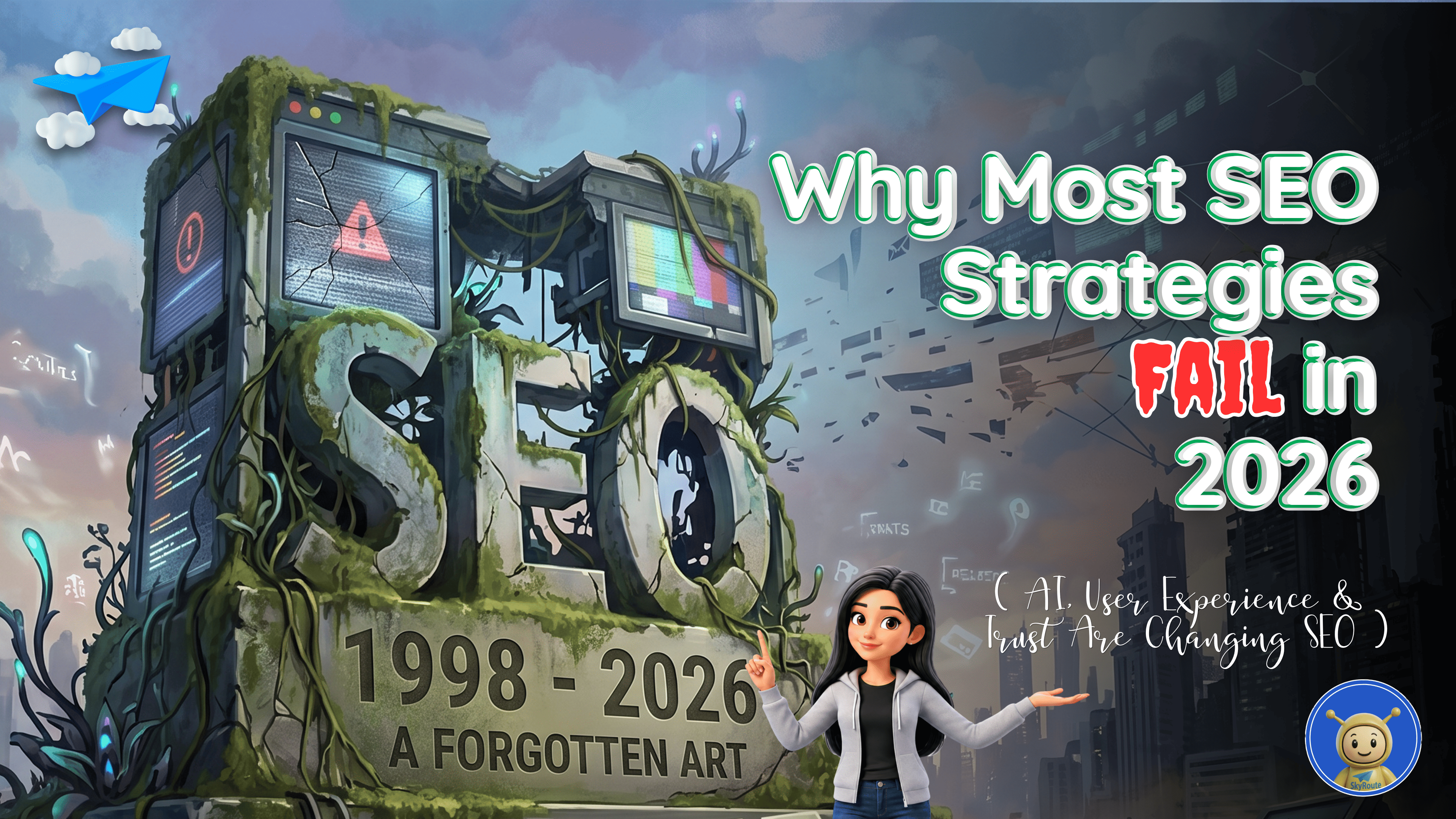

A lot of businesses today already have a website. The design looks modern. The pages are live. The branding looks professional. But despite all of that, the website still fails at one important thing: generating real business enquiries.
Many business owners assume that once their website is launched, customers will automatically start coming in. But after a few months they notice something frustrating: traffic may be increasing, people may be visiting, but enquiries remain low. No calls. No consistent leads. No actual business growth from the website.
A Website Is No Longer Just an Online Presence
A few years ago, simply having a website was enough. Businesses created websites mainly because customers expected them to exist online. Even a basic website helped create trust. But today, users behave differently. People have shorter attention spans, they compare multiple businesses within minutes, and they make decisions very quickly. If your website does not clearly communicate value within the first few seconds, most visitors leave. That is why a business website strategy focused on conversion optimization and trust is far more valuable than a traditional website redesign.
The Biggest Misunderstanding About Website Traffic
One of the biggest misconceptions in digital marketing is this: “More traffic means more leads.” In reality, that is not always true. If your website experience is weak, increasing traffic only increases the number of people leaving your site. Imagine pouring water into a bucket that already has holes in it. If your website loads slowly, read our guide on website performance issues and protect your lead generation. A slow site can destroy the ROI of any website redesign, so SEO web development and conversion-focused content are essential for a true lead generation website.
Why Users Leave Websites Within Seconds
Most website visitors make decisions extremely quickly. Research shows that users often decide within a few seconds whether they want to continue exploring a website or leave. If the website feels confusing, slow, outdated, or untrustworthy, users immediately return to search results and visit another competitor.
This behavior directly affects SEO and lead generation. Google monitors user engagement signals such as bounce rate, time spent on page, and interaction quality. If users consistently leave a website quickly, search engines may assume that the page is not satisfying user intent properly. Over time, this can reduce visibility and rankings.
For example, many businesses invest heavily in Google Ads or social media marketing campaigns, but when users land on the website, they fail to find clear messaging, easy navigation, or strong call-to-actions. As a result, the advertising budget gets wasted because traffic alone does not guarantee conversions. A weak website experience can destroy the ROI of even the best marketing campaigns.
This is why modern business website strategy focuses not only on attracting visitors, but also on improving engagement, trust, and user experience after the visitor arrives. High-converting websites make users feel comfortable, informed, and confident very quickly.
How Google Measures Website Quality in 2026
Search engines have become much smarter in recent years. Google no longer ranks websites based only on keywords and backlinks. Modern SEO also focuses heavily on user experience, content quality, trust, and engagement.
Google wants to rank websites that genuinely help users. That means websites with helpful content, fast loading speed, mobile optimization, clear navigation, and trustworthy information have a better chance of ranking well. This is why businesses can no longer rely on outdated SEO tactics alone.
Helpful content plays a huge role in rankings today. Businesses that publish detailed, valuable, and user-focused blogs build stronger topical authority over time. For example, a company consistently publishing content about SEO, website conversion optimization, web development strategy, and digital marketing creates stronger relevance in Google's eyes compared to websites with very little content.
Google also evaluates trust signals. Websites with professional branding, author information, secure browsing, real testimonials, and transparent business details appear more trustworthy. These signals help improve both SEO performance and customer confidence.
In 2026, SEO success is no longer just about ranking. It is about creating a complete website experience that satisfies users better than competitors.
Why Most Business Websites Fail to Generate Leads
Most business websites do not fail because the business itself is bad. In many cases, the products and services are actually good. The real problem is that the website fails to communicate value clearly. Users visit the website with questions in their minds: What does this company do? Can I trust them? Why should I choose them instead of competitors? How do I contact them? If the website cannot answer those questions quickly, users leave within seconds.
In 2026, users have become extremely selective online. People compare multiple businesses before making decisions. Even local businesses are competing not only with nearby companies, but also with brands that have stronger online presence and better user experience. A website today behaves like a digital salesperson. It must guide users, build trust, explain services, and encourage action. If it fails at those things, the website may receive visitors but still fail to generate enquiries.
One common issue is weak messaging. Many websites use generic phrases like “Best Digital Solutions” or “We Provide Quality Services” without explaining anything specific. Users do not connect with vague statements anymore. They want clarity, real examples, results, and proof that the business understands their problems. Strong messaging is now one of the most important parts of website conversion optimization.
Another major reason websites fail is poor user experience. Some websites look visually attractive, but they are difficult to navigate. Users cannot find pricing, contact details, services, or important information easily. Others suffer from slow loading speed, poor mobile responsiveness, or confusing layouts. When users struggle to interact with a website, they usually leave instead of exploring further.
Trust is another critical factor. A modern business website must include trust signals such as client testimonials, real portfolio examples, reviews, case studies, team information, and clear branding. Without trust, users hesitate to contact the business. This is especially important for service-based businesses, where customers often compare multiple companies before making decisions.
Many businesses also focus too heavily on design while ignoring strategy. A modern design alone does not generate leads. A successful website combines SEO, content strategy, speed optimization, mobile experience, and conversion-focused structure. That combination creates a website that not only looks professional, but also performs effectively in search engines and converts visitors into real customers.
What High-Converting Websites Do Differently
High-converting sites explain things quickly, focus on user problems, build trust gradually, and make action easy. They guide users through Understanding → Trust → Action.
Why Website Development and Marketing Must Work Together
A visually attractive website without proper SEO services, digital marketing, and website development strategy will struggle to generate consistent leads.
Small Website Improvements That Create Big Results
- Rewrite homepage messaging
- Improve page speed
- Add stronger call-to-actions
- Simplify layouts
- Show real proof and testimonials
- Improve mobile responsiveness
- Make navigation cleaner
The Real Purpose of a Business Website
A website should build trust, communicate clearly, guide visitors, generate enquiries, and support conversions.
How to Build a Website That Generates Leads in 2026
A successful business website should do far more than simply exist online. It should attract targeted traffic, communicate clearly, build trust, and guide visitors toward action. Modern websites must combine strong branding, SEO strategy, fast performance, mobile optimization, and conversion-focused content together.
Businesses that treat their websites as long-term growth assets usually perform much better online. Instead of focusing only on appearance, they focus on user behavior, customer trust, and business goals. That approach creates websites that generate consistent leads instead of simply acting as digital brochures.
Whether you run a local business, an ecommerce brand, or a service-based company, your website directly affects how customers perceive your business. A weak website can reduce trust instantly, while a well-optimized website can create credibility, improve visibility, and increase enquiries consistently over time.
The businesses growing fastest in 2026 are not always the biggest companies. They are often the businesses with the clearest messaging, best user experience, and strongest online strategy. That is why website conversion optimization and user-focused design are becoming essential parts of modern digital growth.
Why Businesses Choose Skyroute Solution
Skyroute Solution helps businesses build fast, SEO-focused websites designed for conversions, lead generation, and long-term growth.
Frequently Asked Questions
Why do business websites fail to generate leads?
Most websites fail because they focus only on design instead of user experience,
clear messaging, trust signals, speed, SEO, and strong call-to-actions.
Does website speed affect conversions?
Yes. Slow websites increase bounce rates and reduce user trust.
Fast-loading websites improve engagement and lead generation.
How can I improve my website conversion rate?
Improve clarity, add testimonials, optimize mobile experience,
use stronger CTAs, and simplify navigation.
Is SEO important for lead generation?
Yes. SEO helps businesses attract targeted traffic from search engines,
which increases visibility and potential enquiries.